The Black Religious Experience in the Colonial Period (New Date! March 1, 2026)
PLEASE NOTE: Due to weather conditions, this event has been postponed to Sunday, March 1, 1:00-3:00 PM
Mother Bethel AME Church—the oldest African Methodist Episcopal Church in the nation—and The African Episcopal Church of St. Thomas—the first African Episcopal congregation in the United States—will co-host a conversation exploring the religious lives of Black people in colonial-era Philadelphia.
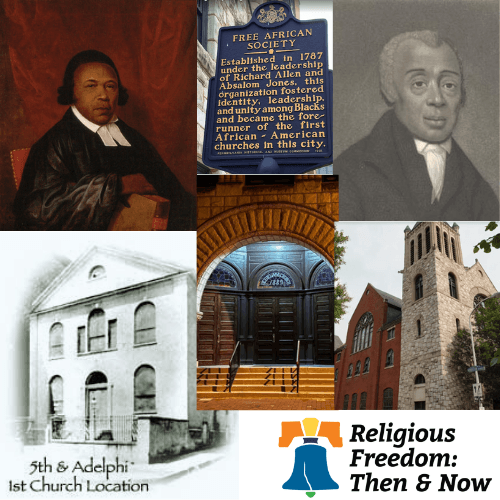
Richard Allen (1760–1831) and Absalom Jones (1746–1818), both formerly enslaved, emerged as two of the most influential Black leaders of the late 18th century. In 1787, they co-founded the Free African Society, a mutual aid organization that became a cornerstone of Black religious, social, and civic life. Through their leadership, they challenged racial discrimination in white-led churches, advocated for freedom and dignity, and laid the groundwork for independent Black religious institutions.
Allen went on to found the African Methodist Episcopal Church, while Jones became the first Black Episcopal priest and helped establish the African Episcopal Church of St. Thomas. Both men also played vital roles during the 1793 Yellow Fever epidemic, organizing care for the sick and supporting the city in a time of crisis.
This program will explore the lasting contributions of Richard Allen and Absalom Jones, the Free African Society, Prince Hall Freemasonry, and other religious and community movements that shaped Black life and leadership in the colonial period.
Can’t make it in person? The program will also be streamed live. Click here to join on Sunday, March 1, 1:00-3:00 PM
Panelists:
Arthur Sudler, Director of the Historical Society and Archives of The African Episcopal Church of St.Thomas
Crawford Wilson, Resident Historian of Mother Bethel AME Church
Michiko Quinones, Co-founder of 1838 Black Metropolis
Moderaters:
Rev. Carolyn C. Cavaness, Pastor of Mother Bethel AME Church
The Rev. Canon Martini Shaw, Rector of The African Episcopal Church of St. Thomas
This program is FREE and part of the Religious Freedom: Then & Now initiative.
Images courtesy Mother Bethel AME Church and The African Episcopal Church of St. Thomas.